
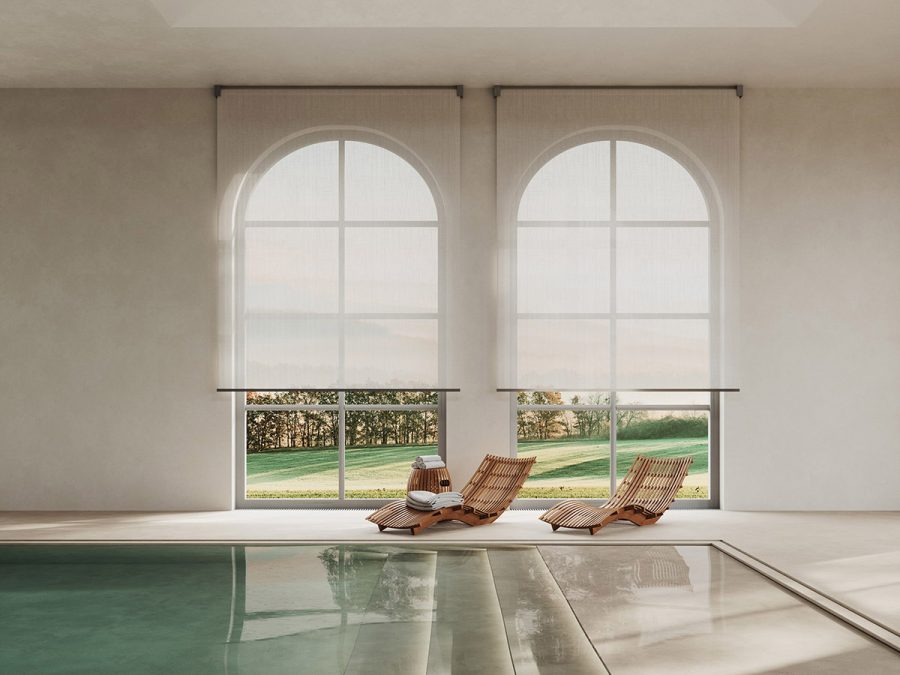
We design our spaces to welcome natural light. Living with it is a balance between light and shade, openness and privacy, the view outside and the comfort within.
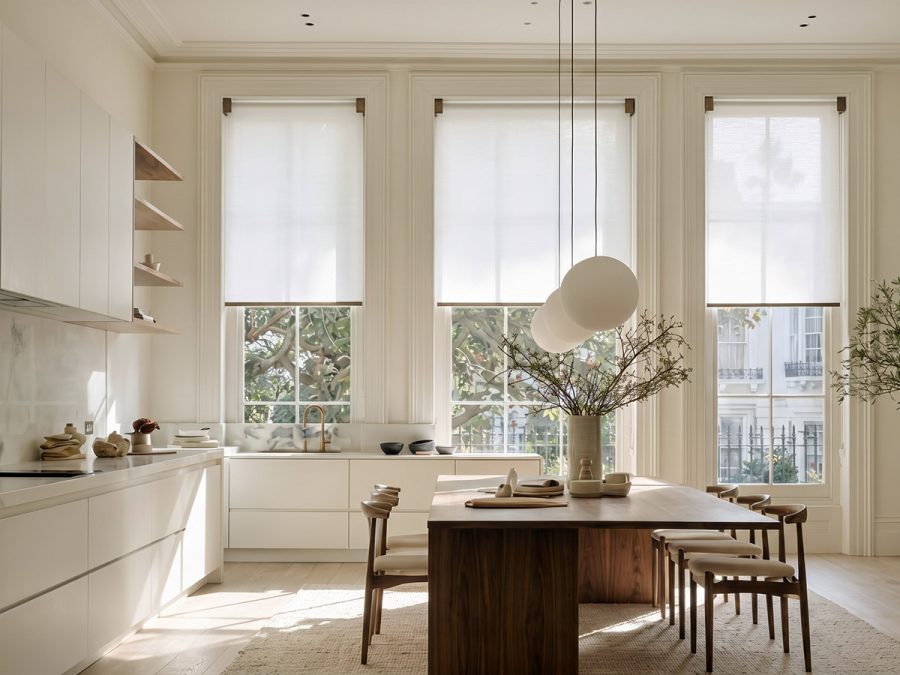
Natural light is fundamental to how an interior is experienced. We are instinctively drawn to it, and much of modern architecture is designed to bring as much daylight as possible into our homes and buildings.
But more light is not always better. Direct sun can become uncomfortable, glare can make a screen difficult to use, and too much light in a bedroom can disturb sleep or wake us earlier than intended. The same natural light that makes a space feel open and bright sometimes needs to be softened, filtered or excluded.
Window treatments allow natural light to be moderated, softening strong sun, reducing glare or darkening a room. The balance will be different for every interior, depending on its architecture, use and the priorities of those living within it.
Orientation
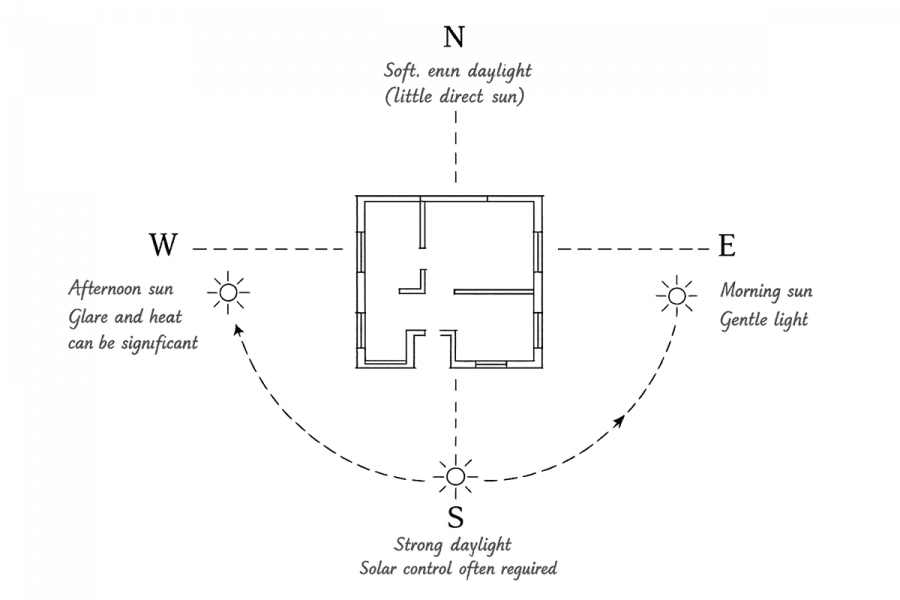
One of the first considerations is the orientation of the window.
East-facing windows receive direct morning sun, often at a relatively low angle. Depending on the glazing and surroundings, this can bring strong light into bedrooms and other spaces early in the day before becoming much softer later.
West-facing glazing experiences the reverse. Direct sun arrives later in the day and, because of its lower angle, can reach further into the room. Glare and heat can become particularly noticeable during the afternoon and early evening.
South-facing glazing generally receives the greatest amount of direct sunlight over the course of the day, but this changes considerably with the seasons. The high summer sun and much lower winter sun meet the window differently and can produce very different conditions within the same room.
North-facing windows receive predominantly indirect daylight. The light tends to be softer and more consistent, but controlling it too heavily can unnecessarily reduce daylight in a room that may already receive little direct sun.
Seasonal changes add another dimension. The path of the sun is higher in summer and lower in winter, changing both the duration of direct sunlight and how deeply it enters the room. Conditions observed during a summer site visit may therefore give a very incomplete picture of how the same window behaves in winter.
Orientation is only part of the picture. The size and position of the glazing, surrounding buildings, trees, balconies, overhangs and the depth of the room can all alter the amount of light that ultimately reaches the interior.
Light and Privacy
The relationship between light and privacy changes throughout the day. During daylight hours, a sheer or open fabric can provide a degree of privacy while retaining natural light and a view through to the outside.
After dark, the conditions are reversed. When the interior is illuminated and it is darker outside, the same fabric can become almost transparent from the outside. A treatment that provides sufficient privacy during the day may therefore provide very little at night, making a second layer necessary where night-time privacy is required.
The degree of daytime privacy also varies according to the fabric and the amount of light inside and outside. Privacy is not a fixed characteristic of a fabric; it depends on the light conditions in which it is used.
Darkening the Room
There is an important distinction between blackout fabric and complete darkness.
A blackout fabric prevents light from passing through the material itself, but with most conventional window treatments, some light will still enter around the edges. The amount will depend on the treatment, its position and the architecture of the window.
For most residential interiors, a blackout blind or curtain can provide a high level of room darkening without the need for a fully technical system. Where near-complete darkness is essential, however, a different approach is required. Roller blinds with cassettes and side channels are designed to minimise light around the edges, but their technical construction has a greater visual presence and may not be appropriate for every interior.
Studio Note
There are several ways to improve room darkening without introducing a technical blackout system.
For roller blinds, positioning the blind outside the reveal allows for greater fabric overlap, while a standard roll, with the fabric falling closer to the wall, reduces the gap behind the blind. A fascia or pelmet can help limit light from above.
With curtains, creating returns at the sides, adding a pelmet at the top and allowing the fabric to puddle on the floor can all reduce light gaps.
Each of these measures can improve room darkening, but they also affect the appearance of the window treatment. The level of darkness required needs to be balanced against their visual impact.
Finding the Balance
There is always a balance to be found when managing natural light. A more open fabric can retain daylight and the view but provide less protection from strong sun. A denser fabric can reduce glare and solar gain more effectively, but will also reduce transparency and the amount of natural light entering the room.
Sometimes, the right balance can be achieved with a single layer. Often, however, the requirements are too different for one treatment to meet them successfully. Daytime privacy may need to be achieved without losing natural light, while after dark complete privacy becomes the priority. In a bedroom, filtered daylight and privacy may be desirable during the day, with a much higher level of room darkening needed for sleep.
In these cases, a second layer allows each treatment to perform a different role.
Join Our World
RECEIVE DESIGN INSIGHTS, PROJECT STORIES AND INSPIRATION FROM OUR STUDIO