
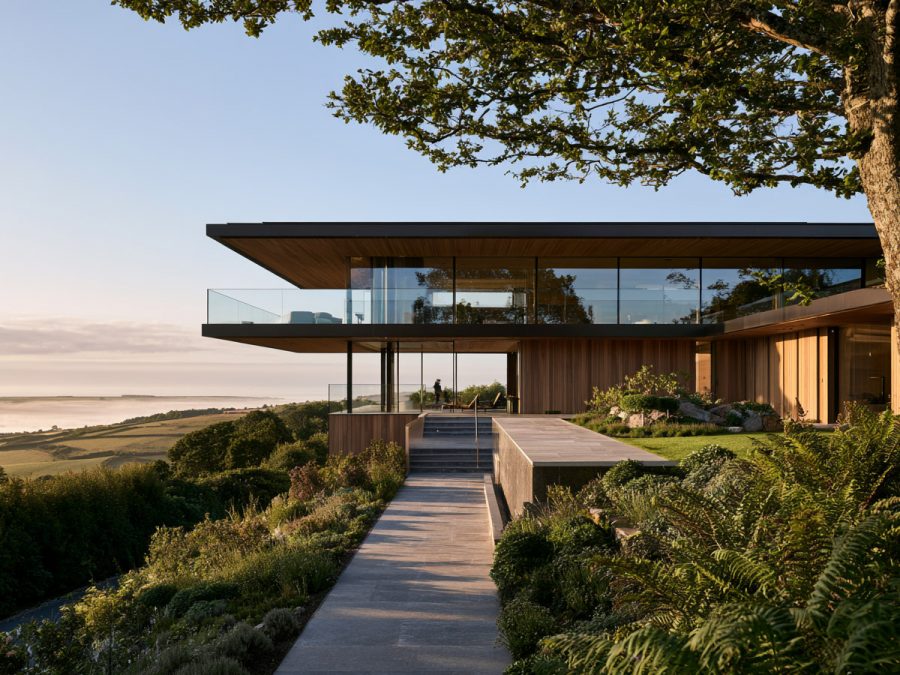
The best window treatments do not begin with products.
They begin with architecture.
Exceptional window treatments start with understanding the architecture, the light and the purpose of the space.
While light and function often take priority, the architecture presents its own set of conditions, with both opportunities and limitations. The scale, position and arrangement of the windows, the depth of the reveals and the way the windows open all influence the choice and positioning of the treatment.
Room proportions and the available wall space can affect the scale and position of curtains, while ceiling construction can determine how tracks or roller blinds are fitted or concealed. Motorised treatments introduce another consideration: the provision and positioning of power.

Considered Early
The earlier window treatments are considered, the greater the freedom in how they can be designed.
Too often, they enter the conversation only once the architecture and interior are largely complete. By that stage, ceiling details, joinery, lighting and electrical provision have been fixed, leaving the window treatment to work within conditions that were never designed to accommodate it.
This can have a surprising effect on what is achievable. There may be nowhere for curtains to stack without covering the glazing, insufficient depth for more than one treatment, no suitable provision for a concealed track, or power in the wrong position for motorisation. Individually, these can appear to be small details. Collectively, they can rule out treatments that might otherwise have offered the best balance of appearance and function.
Allowing for window treatments at the design stage does not require every detail to be specified early. It means understanding the likely requirements while there is still time to accommodate them. Recesses can be created for tracks or blinds, joinery designed around them, power positioned correctly and sufficient space allowed for curtain stacks or multiple treatments.
Window treatments should be a standard consideration during the design of an interior, rather than a decision left until the architecture is complete.
Studio Note
One of the most common issues we encounter is window treatments being considered too late in the project. Details that could have been accommodated relatively easily during the design or construction stage can become difficult, and disproportionately expensive, to introduce retrospectively.
A ceiling recess, correctly positioned power supply or allowance within the joinery may be a relatively small consideration early on, but can have significant cost implications once the interior is complete.

Reading the Architecture
Window treatments become part of the architecture of a room. Their position, scale and proportion affect how the interior is perceived, how much of the glazing remains visible and the presence they have within the space.
Integration does not necessarily mean concealment. A visible window treatment can be as much a part of the architecture as one designed to disappear. Both have their place, depending on the architecture and the intended character and feel.
The window treatment is not an addition to the architecture. It becomes part of the architecture itself.


Why Window Treatments Matter More Than Most People Realise
Light Is the First Material
Join Our World
RECEIVE DESIGN INSIGHTS, PROJECT STORIES AND INSPIRATION FROM OUR STUDIO