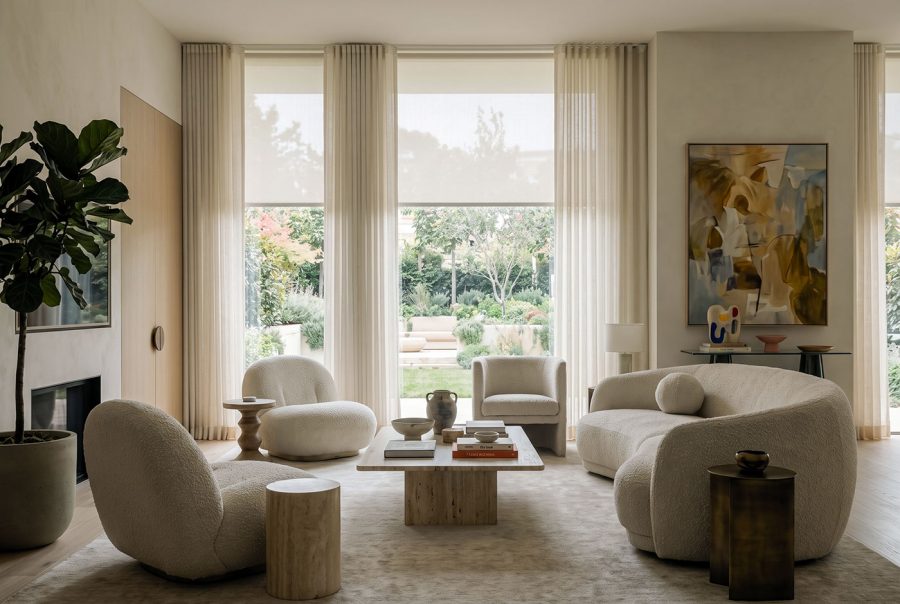
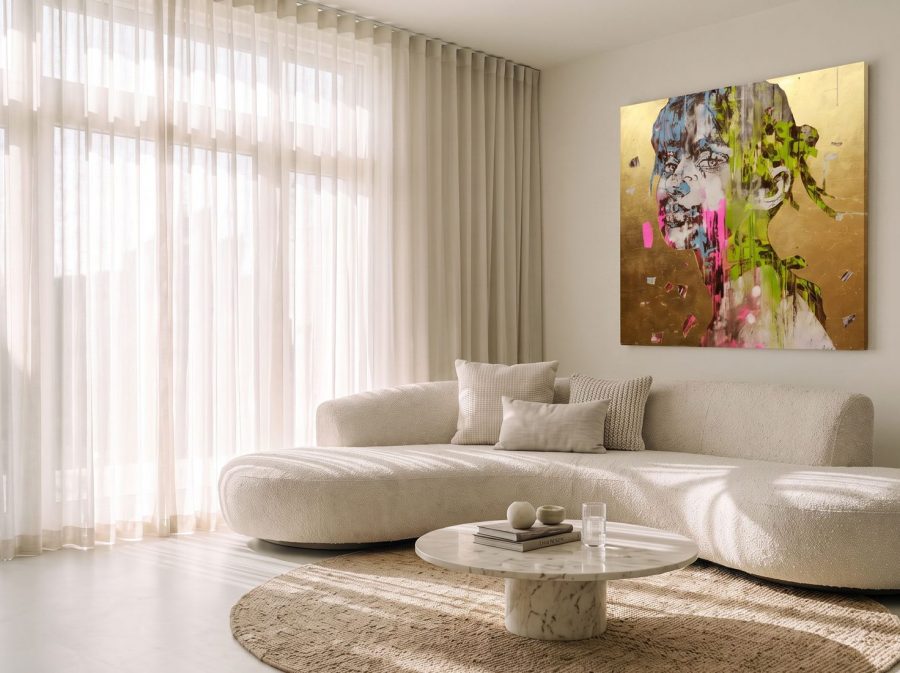
Window treatments are among the most important, yet often the most overlooked, elements of an interior. They influence natural light and provide privacy, affecting how a space looks, feels and functions throughout the day.
Why They Matter?
Window treatments have a profound influence on everyday life within an interior. From the first light in the morning to privacy after dark, their effect is felt throughout the day.
They determine how much natural light enters a room and how that light is experienced. They can soften strong sun without closing a room off completely, reduce glare where people work, provide privacy when it is needed and create the level of room darkening required for comfortable sleep. They also determine how much of the view remains visible and how open and airy the interior feels.
Few elements of an interior have such a direct influence on everyday life.
Priorities and Balance
There is rarely a perfect solution that meets every potential requirement of a window.
A more transparent fabric retains daylight and views but offers less privacy. Greater solar control can reduce glare while limiting the view. A blackout fabric can provide a high level of room darkening, but without a separate light-filtering layer, achieving privacy also means losing natural light. Additional layers can offer greater flexibility, but they also bring more fabric, hardware and visual presence.
Good window treatment design is a question of priorities and balance.
The aim is to establish what matters most and design accordingly.
Exceptional window treatments are rarely the result of individual products. They are the result of understanding architecture, light and the way a space is intended to be lived in.
What Shapes a Window Treatment?
Successful window treatments begin with an understanding of the conditions around them. Architecture, light, function, proportion, material and detail each influence the result.
01. Architecture
The window in context.
02. Light
Changing throughout the day.
03. Function
The requirements of the room.
04. Proportions
In relation to the architecture.
05. Materials
Appearance and performance.
06. Details
The details make the design.
About this Guide
The Complete Guide to Window Treatments brings together the principles, practical considerations and technical knowledge behind the design and specification of window treatments, based on our studio’s experience of dressing thousands of windows.
It explores architecture, natural light, privacy and proportion; the characteristics and applications of different treatments; fabric selection and performance; and the details that influence both appearance and function.
The guide reflects the VENESTRE Philosophy: our belief that window treatments should complement the architecture rather than overwhelm it, prioritising light, function and timeless design over trends or decoration.