
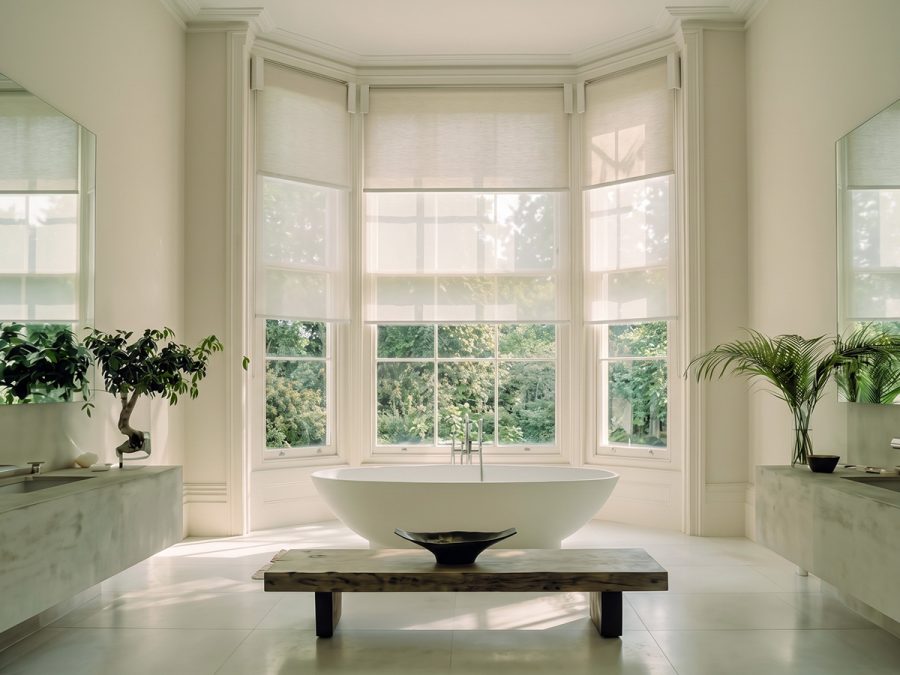
A window sits between two worlds: the intimacy of the interior and the openness beyond. Privacy is the balance between the two.
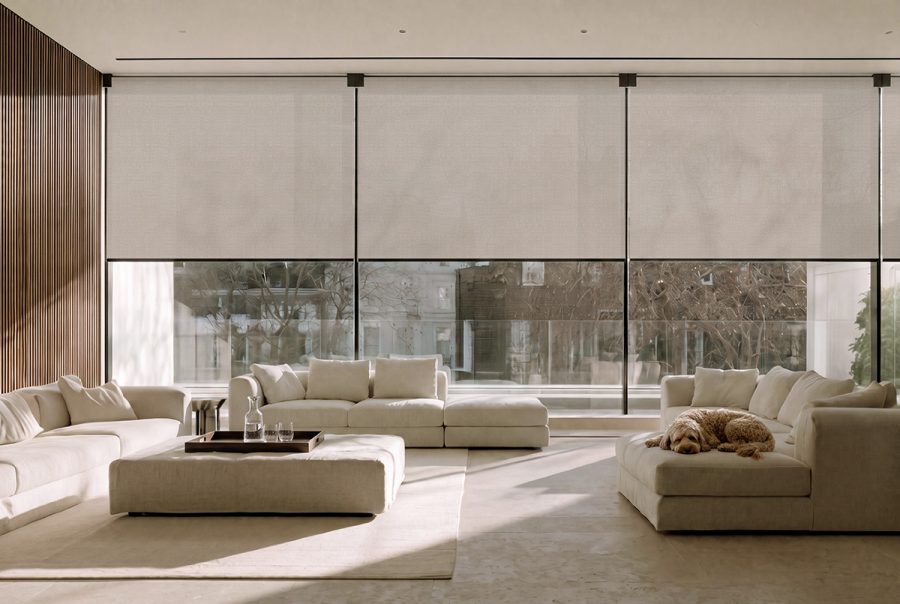
Privacy requirements vary from room to room and often change throughout the day. A living room may feel comfortably open during daylight hours but require greater privacy after dark. A bedroom may prioritise seclusion at night while welcoming natural light in the morning. Bathrooms and dressing rooms demand a different level of privacy again.
The surrounding environment also plays an important role. An urban townhouse overlooked by neighbouring properties presents different challenges from a rural home with uninterrupted views. The position of the building, the proximity of neighbouring windows and the changing relationship between daylight and artificial light all influence the most appropriate solution.
Privacy Without Losing the View
Sheer fabrics offer a degree of daytime privacy while maintaining a connection with the outside. This effect, however, depends on the light conditions on either side of the fabric.
During the day, when it is brighter outside than inside, a sheer blind or curtain can significantly reduce the view into a room, in some conditions making it almost impossible to see inside, while maintaining a view out. After dark, when the interior is illuminated and it is darker outside, that relationship reverses. The same fabric that provided effective screening during the day may offer very little privacy at night.
As a general principle, the openness of a fabric affects the balance between privacy and view:
More open → clearer view → less screening
More closed → greater screening → reduced view and often less daylight
Understanding this relationship is important when finding the right balance between privacy and view, and determining whether an additional layer is required.
Colour and the View
The colour of a sheer or screen fabric can have a surprising effect on how clearly the outside can be seen through it. Darker fabrics generally preserve the view more clearly than lighter ones, particularly with open-weave screen fabrics.
Darker fabric tends to recede visually, allowing the eye to focus beyond it. Lighter fabrics reflect and scatter more light, making the fabric itself more visible and the view beyond less defined.
This means that choosing a lighter fabric does not necessarily result in a more open visual connection with the outside. Where preserving the view is a priority, a darker fabric can sometimes be the less visually intrusive choice.
Studio Note
A sheer fabric should never be specified simply as providing “privacy”. Its performance depends on the light conditions on either side of the window, the distance from the fabric and the degree of overlooking. The same blind can provide excellent screening in one situation and very little in another.
Privacy Window by Window
Privacy does not necessarily need to be addressed in the same way at every window. In a room with more than one elevation, one side may be overlooked by neighbouring properties while another opens onto a private garden or uninterrupted view.
Applying the same level of screening to every window can unnecessarily reduce daylight and compromise views where privacy was never a concern. Considering privacy window by window allows each treatment to respond to its surroundings, rather than applying the most restrictive requirement throughout the room.
When One Layer Is Enough
A translucent fabric can provide a high level of privacy by blocking the view in both directions, while still allowing natural light into the room. Where maintaining a view is not important, this can offer an effective balance between privacy and daylight.
A completely opaque fabric, such as blackout, provides the highest level of visual privacy, but at the cost of natural light and any connection with the outside. In some situations, this is entirely appropriate and a single treatment may be all that is required.
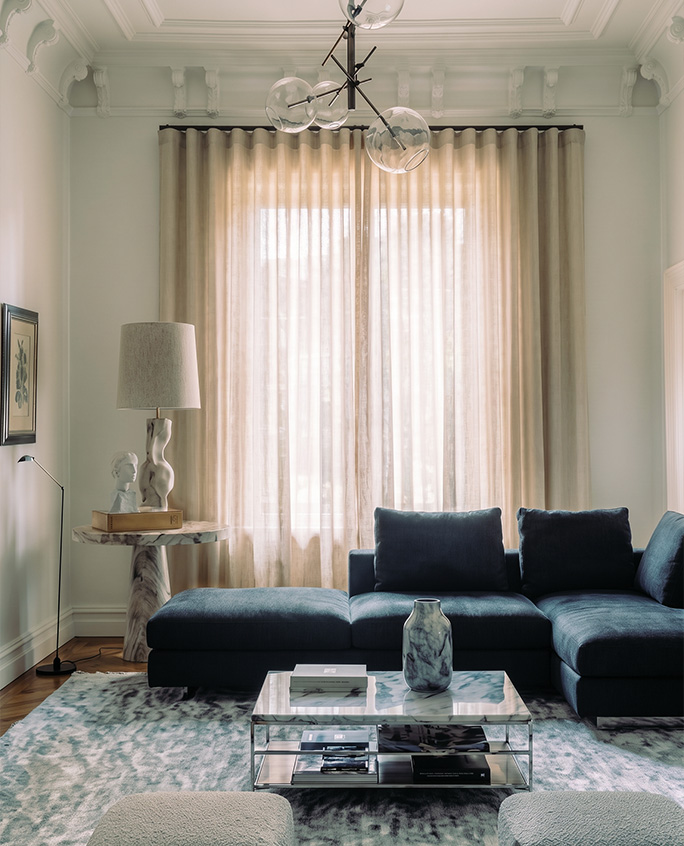
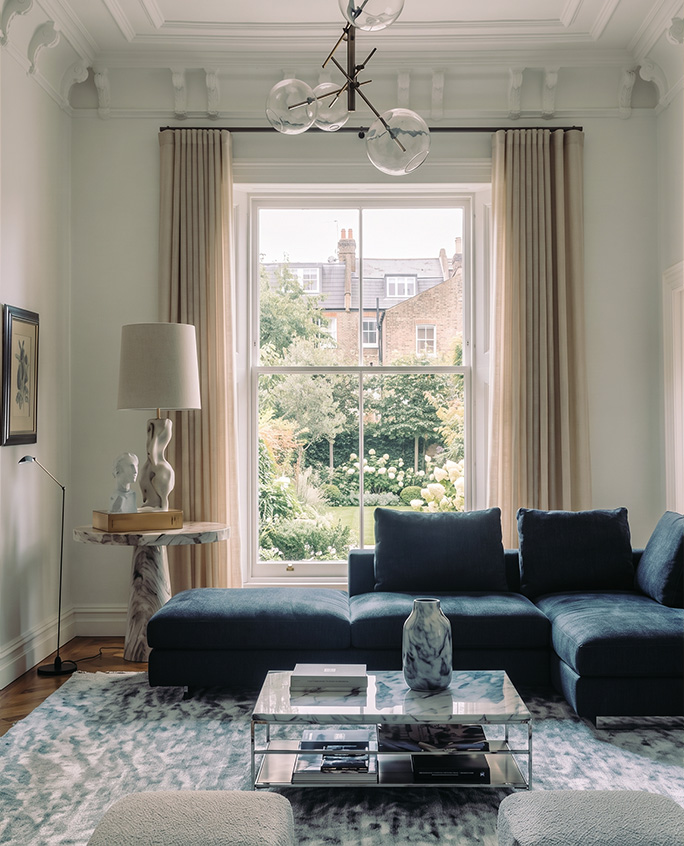
Layering with Purpose
There are situations where the requirements are simply too different for a single treatment. Daytime privacy may need to be achieved while retaining natural light and a view outside, while complete privacy is required after dark
Layering allows these conflicting requirements to be addressed separately. A sheer treatment can serve the room during the day, with a more opaque layer introduced in the evening and at night.
Layering allows multiple requirements to be addressed more effectively and precisely.
Layering is most successful when each layer has a reason to be there.
Join Our World
RECEIVE DESIGN INSIGHTS, PROJECT STORIES AND INSPIRATION FROM OUR STUDIO