
← Previous Chapter / Next Chapter coming soon
What is Layering
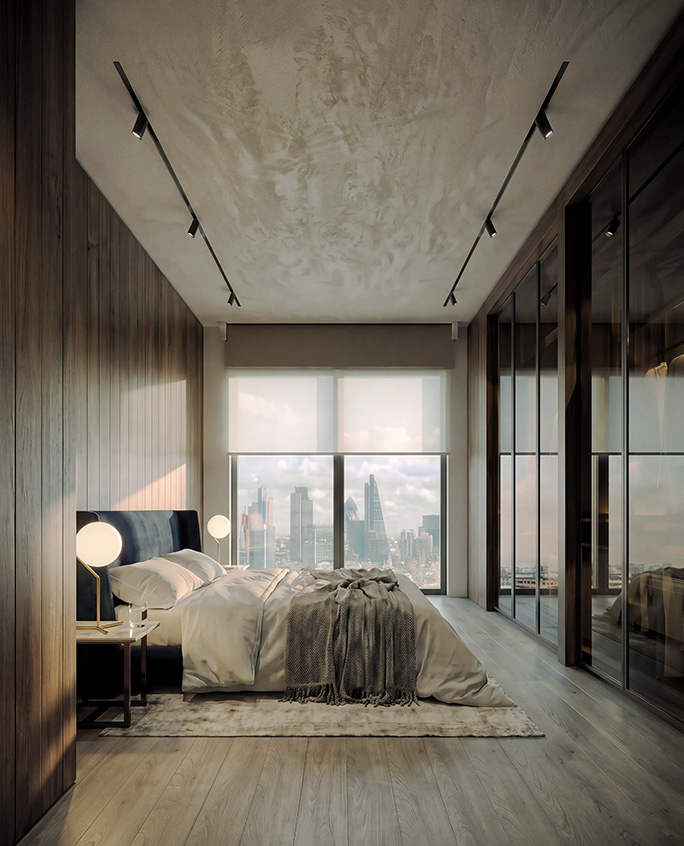
Layering combines complementary window treatments, allowing each to perform a specific role. Sheer fabrics soften daylight, provide daytime privacy and maintain a connection with the outside. Translucent fabrics offer greater privacy while preserving natural light, while dim-out and blackout fabrics provide increasing levels of room darkening.
Different types of window treatment also bring different qualities to an interior. Roller blinds offer clean, architectural lines, while curtains introduce softness, texture and warmth, as well as improving acoustic comfort.
Making Space for Layers
Layering brings additional fabric and hardware into the room. While this can serve an important purpose, multiple layers can quickly begin to occupy valuable space and make a window treatment feel bulky and visually heavy. A typical double roller blind needs greater depth. A blind behind curtains needs enough separation so the two can operate independently. Double curtain tracks increase the depth of the treatment and their stacks require wall space.
Too many layers can work against the architecture of an interior, particularly in contemporary spaces where clean lines are often integral to the design. In more traditional spaces, too much layering can draw attention away from the architecture and diminish the presence of the original detailing around the windows
The challenge is to gain the flexibility of layering without allowing the window treatment to compromise the architecture around it.
Studio Note
The desire to combine the functionality of two layers without introducing the depth and visual weight typically associated with conventional solutions was one of the reasons behind the development of the V01 Double roller blind system. Its compact arrangement accommodates two fabric layers within approximately the same depth as a conventional single roller blind, allowing the benefits of layering without unnecessarily adding bulk to the window.
The Order of the Layers Matters
The order in which treatments are layered affects both their appearance and, with manual solutions, their convenience of use.
When combining two treatments of the same type, such as two roller blinds or two sets of curtains, the sheer layer is often positioned closer to the window, with the more opaque fabric forming the outer, more decorative layer. This creates a natural visual hierarchy, but is also practical because the sheer layer is generally used more frequently, often remaining in place for much of the day.
This does not need to be a rule. Where the more opaque treatment serves a primarily practical purpose, there may be good reason for it to sit closer to the window and remain largely concealed when not in use.
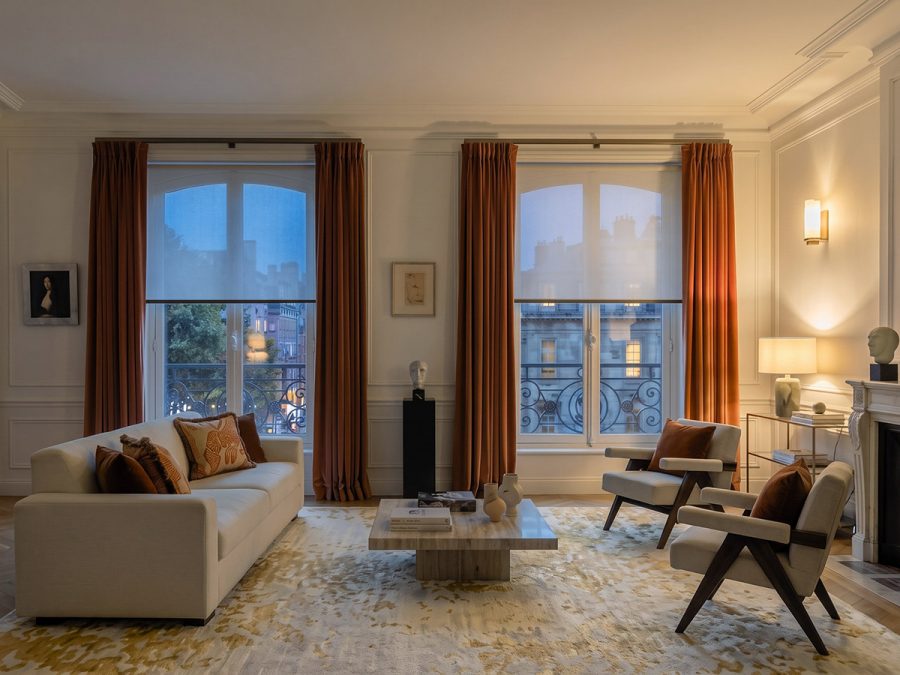
When roller blinds and curtains are combined, the roller blind will usually sit closer to the window, but either treatment can provide the more opaque layer. This decision has both practical and visual implications.
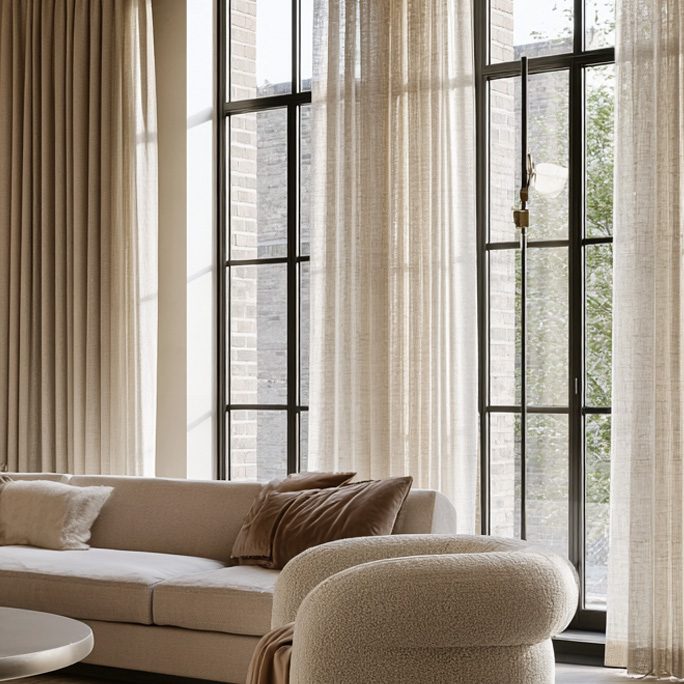
Where a light and airy interior is the objective, a roller blind in a heavier fabric combined with sheer or semi-sheer curtains can work particularly well. The roller blind has very little visual presence when raised, leaving the lighter curtains as the more permanent element at the window.
When the arrangement is reversed, with a sheer blind and more opaque curtains, the heavier fabric remains visually present even when the curtains are open. This may be desirable in more traditional interiors, or simply where a greater sense of warmth and softness is preferred.
Join Our World
RECEIVE DESIGN INSIGHTS, PROJECT STORIES AND INSPIRATION FROM OUR STUDIO